

Your Mind Is Not the Problem. The World Around It Might Be.
A Mental Health Awareness Month reality check for Ugandan youth and a word for those who keep confusing queerness with a diagnosis.

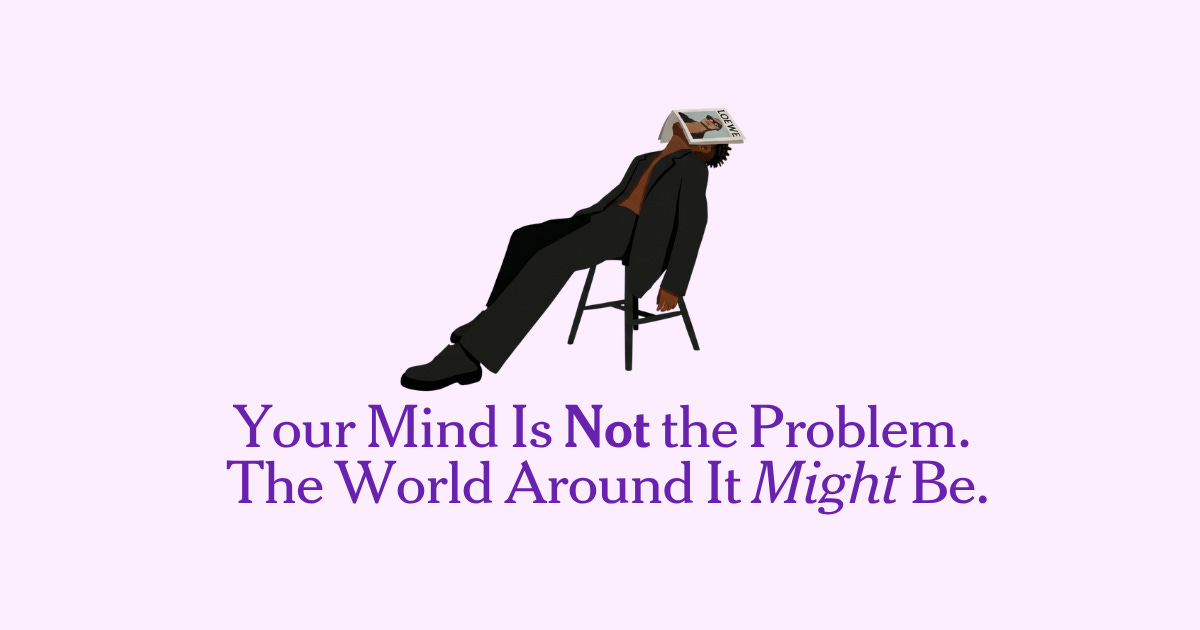
May is Mental Health Awareness Month. And while the rest of the world is posting green ribbons and wellness affirmations, Uganda is sitting with a number that should make every policymaker, parent, and pastor uncomfortable: over 40% of Ugandan youth are experiencing some form of mental distress. Not 4%. Not a small corner case. Four in every ten young people.
Let that land.
Now add to that the specific weight carried by LGBTQ youth in this country: the hiding, the fear, the family rejection, the legal precarity, the daily calculation of whether today is safe enough to exist openly and you start to understand that we are not talking about a mental health crisis in the abstract. We are talking about people. Real ones. With names and dreams and a right to psychological safety that the systems around them are actively denying. Growing up, every queer youth is forced to become an actor, masking their queerness, performing for an audience of people determined to keep the status quo of patriarchy. This causes us to live a life of constant anxiety and mental distress. Whether we like it or not.
But before we get into all of that, let us deal with the misconceptions. Because there are many, and some of them are genuinely embarrassing for us living in 2026!!!
“Mental health problems mean you are crazy”
This one has been living rent-free in Ugandan culture for decades, and it needs to be evicted.
Mental health exists on a spectrum, the same way physical health does. You do not have to be in a psychiatric ward to be struggling. Anxiety, burnout, grief, chronic stress, low self-worth — these are mental health challenges. They are also extremely common. The person sitting next to you in the taxi could be navigating depression while looking completely “fine.” That is kind of the whole point. One of the biggest drivers of anxiety, burnout and depression is this economy!! Money in Uganda stresses you, whether you have it or not. And when you have it, you have anxiety of losing it. This coupled with “queer tax” and “pink tax” leaves us drowning in sorrows with no prayers.
The idea that mental health issues only happen to people who have “lost their minds” stops young people from naming what they are going through, seeking help, or even believing that what they feel is valid. And in a country where mental health services are critically underfunded and the ratio of psychiatrists to population is almost comically low, we cannot afford to also be fighting stigma at every turn.
“It is just stress. Pray about it.”
Faith is a real and meaningful source of support for many people. Nobody is here to argue that. But telling a young person whose nervous system is in chronic distress to simply pray harder is not pastoral care. It is a deflection and sometimes a dangerous one.
Depression is not a spiritual weakness. Anxiety is not a sign of insufficient faith. PTSD does not resolve itself through fasting. These are health conditions. They have causes. They have evidence-based treatments. And the sooner religious communities in Uganda decide to be part of the solution rather than a barrier to it, the better off young people will be.
You can hold your faith and go to therapy. The two are not enemies.
“Young people have nothing to be stressed about”
Ah, this classic. Usually delivered by someone who has long forgotten what it is like to be young in a country where employment is scarce, economic pressure is inherited, social media comparison is relentless, and the future feels genuinely uncertain.
Ugandan youth are navigating all of this on top of systems that were not designed for them. Schools that pathologize differences. Families that reward silence. A public health infrastructure that barely has enough resources for physical illness, let alone mental health support. The idea that they have “nothing to worry about” is, with respect, deeply out of touch.
Now, About That Other Misconception
Let us talk about the one that has been getting a lot of oxygen lately and not the good kind.
The claim that being LGBTQ is a mental illness has been formally rejected by every major medical and psychiatric body in the world. The World Health Organization removed homosexuality from its International Classification of Diseases in 1990. That was thirty-five years ago. The American Psychiatric Association did it even earlier, in 1973. This is not a debate. The science settled it. Repeatedly.
And yet, here we are.
The Trump administration’s aggressive rollback of trans rights in the United States executive orders erasing gender recognition, banning trans people from the military, pushing the idea that transness itself is a kind of delusion has given new life to a very old and very discredited idea: that queer people are mentally unwell by virtue of being queer.
This is not science. This is mambo jambo nonsense from prejudiced politicians
What the research actually shows is something called minority stress theory the consistent finding that LGBTQ people experience higher rates of depression, anxiety, and suicidal ideation not because something is inherently broken in them, but because of the discrimination, rejection, violence, and social exclusion they face. The distress is a response to the environment. Remove the hostility, and the outcomes improve dramatically.
In other words: the problem is not the queer person. The problem is what is being done to them.
Uganda’s Double Burden
For LGBTQ youth in Uganda, this is not an abstract transatlantic debate. It is daily life.
Since the passage of the Anti-Homosexuality Act, the psychological toll on queer communities here has been documented, named, and felt in real bodies. Young people who cannot access safe housing. People who have lost jobs, families, and support networks. Those who are afraid to seek medical care because they do not know what the doctor will do with that information. Activists who wake up every morning and choose, again, to show up while carrying a level of chronic stress that most people cannot imagine.
And then , then , some people have the audacity to point to the resulting mental health struggles as proof that queerness itself is the problem. That logic is the equivalent of hitting someone and then citing their bruises as evidence that they are naturally fragile.
It is cruel.
What Mental Health Awareness Actually Requires
Awareness without accountability is just aesthetics. If we are serious about mental health in Uganda and we should be, given those numbers then we need to be honest about what is making people sick.
It is the stigma that stops young people from naming their pain.
It is the lack of accessible, affordable mental health services.
It is the family and community rejection that turns a young person’s home into their first source of trauma.
It is the legal and social systems that make certain people’s existence a crime.
It is the global political currents that are actively marketing the idea that some people are disordered just for being who they are.
Awareness means seeing all of this clearly, not just the parts that are comfortable.
A Note to Queer Youth in Uganda
Your mental health matters. Not despite who you are because of it. You are carrying a lot, and the fact that you are still here, still moving, still building community and art and life in the middle of all of this, says something about a kind of resilience that no government policy can pathologize.
Find your people. Protect your peace where you can. And know that there is nothing wrong with your mind that a safer world would not help.